
ADHD and Brain Stimulation: Exploring tDCS and tACS
Attention Deficit Hyperactivity Disorder (ADHD) can affect many parts of everyday life. For example, a person may find it hard to stay focused, manage impulses, remember instructions, or finish tasks. Researchers are exploring different ways to support people with ADHD. One approach receiving growing interest is non-invasive brain stimulation.
Understanding Brain Stimulation and ADHD
Challenges related to ADHD are often associated with executive functions, which help us plan, organise information, regulate our responses, and complete tasks.
Researchers are exploring different ways to support these areas of functioning, including non-invasive brain stimulation. This approach uses electrical currents to influence brain activity without requiring surgery. Two techniques being studied are tDCS and tACS.
What Are tDCS and tACS?
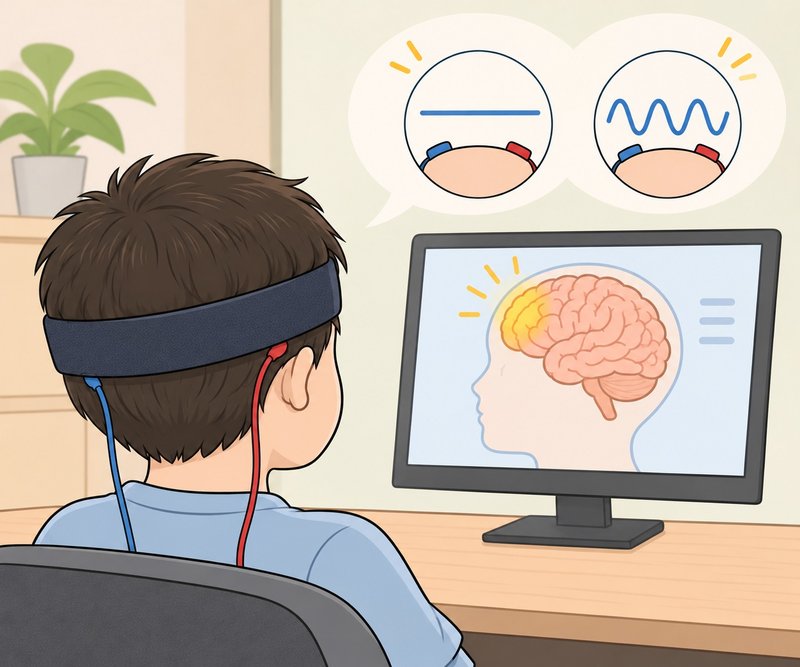
- tDCS (Transcranial Direct Current Stimulation): tDCS uses a low-intensity, constant electrical current delivered through electrodes placed on the scalp. This current may influence how easily brain cells respond to incoming signals.
- tACS (Transcranial Alternating Current Stimulation): tACS uses a low-intensity electrical current that changes direction in a rhythmic pattern. Researchers are studying how this stimulation may interact with the brain's natural rhythms.
To learn more about how these techniques work, read our article on tDCS and tACS.
How Are tDCS and tACS Being Studied for ADHD?
tDCS and tACS can target several areas often linked to ADHD:
- Attention: Some studies have reported improvements in attention-related performance following tDCS (Zhang et al., 2025). A recent clinical trial has also investigated the potential effects of tACS on attention in adults with ADHD (Fu et al., 2025).
- Impulse Control: Impulse control or inhibitory control helps us pause before responding or acting on an impulse. Some improvements have been found in studies using tDCS to target brain areas related to impulse control (Zhang et al., 2025)
- Memory: Working memory helps to keep information in mind and use when needed, such as remembering instructions or following several steps in an activity. Researchers are exploring whether tDCS may help support this ability, with some studies reporting improvements in working memory performance (Yin et al., 2024).
Looking Forward: What to Expect
Brain stimulation shows promise in treating symptoms related to ADHD. Research in this field continues to grow and new, innovative ways are being developed to target cognitive domains that play a part in attention, inhibitory control, memory, among other domains.
At Brain Optimax, we incorporate tDCS and tACS into our neurotechnology services, with approaches considered according to each client's needs and assessment results. For more information, feel free to visit our website or contact our team.
References:
Fu, Z., Tian, J., Kang, S. et al. (2025). Efficacy and safety of transcranial alternating current stimulation in adults with attention deficit hyperactivity disorder: a double-blind randomized sham-controlled trial. Mol Psychiatry31, 2675–2684 (2026). https://doi.org/10.1038/s41380-025-03407-0
Zhang, M., Ma, C., Liu, Y., Ma, X., Liu, T., Jia, F., & Du, L. (2025). Efficacy and safety of transcranial direct current stimulation for children and adolescents with attention-deficit/hyperactivity disorder: a systematic review and meta-analysis. Journal of psychiatry & neuroscience : JPN, 50(4), E248–E266. https://doi.org/10.1503/jpn.250032
Yin, Y., Wang, X., & Feng, T. (2024). Noninvasive Brain Stimulation for Improving Cognitive Deficits and Clinical Symptoms in Attention-Deficit/Hyperactivity Disorder: A Systematic Review and Meta-Analysis. Brain sciences, 14(12), 1237. https://doi.org/10.3390/brainsci14121237