
What to Expect During a tDCS and tACS Session
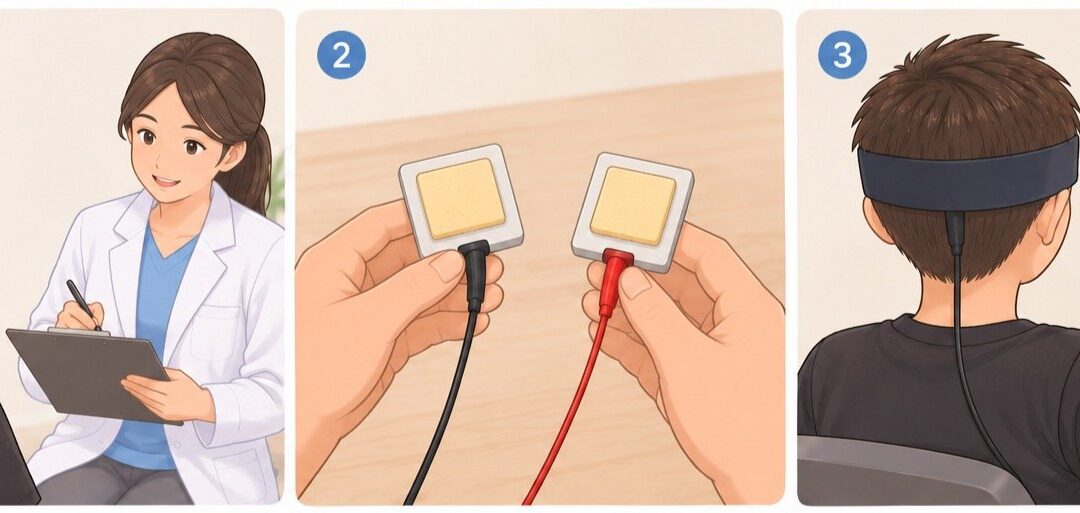
What happens during brain stimulation? If you or your child are considering transcranial direct current stimulation (tDCS) or transcranial alternating current stimulation (tACS), you may be curious about how the process works. Here, we will break down the steps usually taken during this treatment:
1. Before the Session: Assessment and Preparation
Before starting tDCS or tACS, the practitioner first reviews the client's needs, relevant medical history, and health conditions to determine whether brain stimulation is appropriate.
At Brain Optimax, brain mapping is part of the assessment process to understand an individual's brain activity patterns and help determine an appropriate stimulation protocol. Once the protocol has been established, clients will receive an explanation of the purpose of the stimulation and what they need to know before the session begins.
The assessment results are also taken into consideration when determining electrode placement and the stimulation parameters to be used.
2. Electrode Placement: Where Are the Electrodes Positioned?
Before the session, the practitioner would prepare the electrodes. The electrodes consist of conductive sponges soaked in saline solution and placed in holders. Each holder connects to the stimulation device through a wire, which carries the electrical current to the electrode. They would then be placed in specific areas of the scalp.
Electrodes consist of an anode and cathode. In conventional tDCS, an anode increases the brain’s response to stimulation (excitability), while cathode decreases it. In tACS, however, the electrodes take turns becoming anode and cathode, therefore it does not have a fixed role. To learn more visit our article about the benefits of tDCS and tACS.
Depending on the protocol, one electrode may be positioned over the intended stimulation area, while the other is placed at a different location, such as another area of the scalp or an appropriate reference site, such as the arm.
3. What Does Stimulation Feel Like?
Once the electrodes are in position, the practitioner starts the stimulation according to the selected protocol.
Both tDCS and tACS delivers a low-intensity electrical current through the electrodes. tDCS delivers a relatively constant current in one direction, while tACS uses an alternating current that changes direction rhythmically. Clients may report mild tingling, itching, warmth, or a slight prickling feeling. These sensations are generally temporary and may vary between individuals.
During the session, the client typically remains comfortably seated while the practitioner monitors the equipment and checks for any discomfort. The client can do a variety of activities, as long as they are seated, from working on their homework to taking a nap.
4. After the Session: What Happens Next?
Once stimulation is complete, the practitioner switches off the device and removes the electrodes. It is important to remember that changes in attention, memory, or other cognitive functions may not be immediately noticeable after a single session. Brain stimulation protocols often involve multiple sessions, and individual responses can vary.
At Brain Optimax, tDCS and tACS are incorporated into broader, individualised intervention plans. The practitioner considers the client's needs and progress when determining how stimulation fits into the overall programme.
5. Every Session Is Different
Although the general procedure is similar, not every tDCS or tACS session follows exactly the same protocol. Electrode placement, stimulation intensity, frequency (for tACS), and session duration may vary depending on the individual treatment plan.
The protocol is therefore planned around each client's needs rather than applying the same settings to everyone. Practitioners also take assessment findings and the client's responses throughout the programme into consideration.
If you have questions about whether tDCS or tACS may be appropriate, speak with a qualified healthcare professional or contact our team to learn more about the services available at Brain Optimax.