
Neuromodulation: Understanding tDCS and tACS
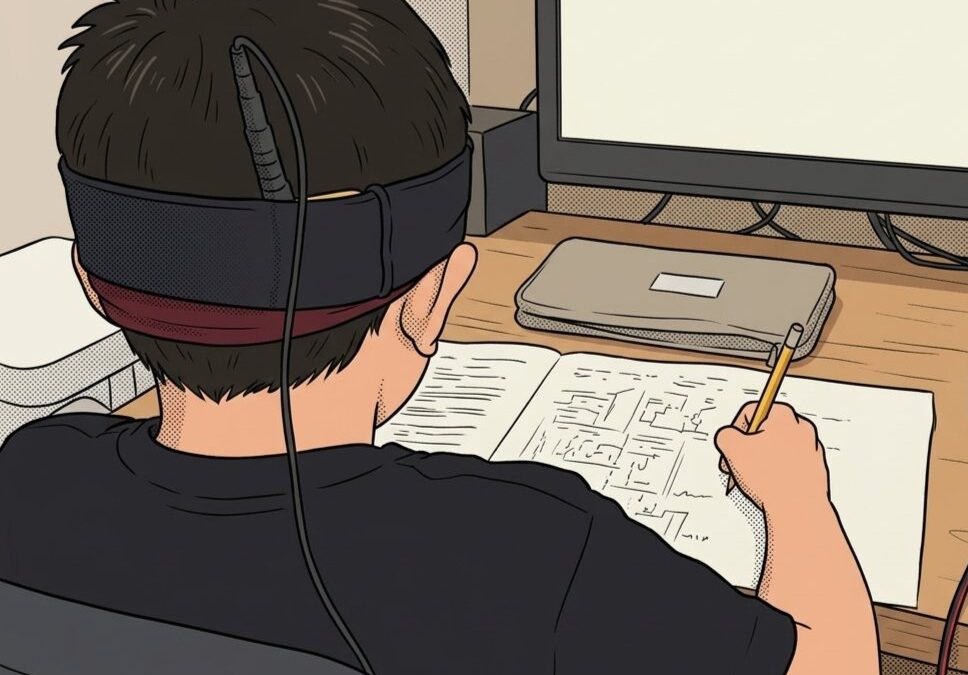
Our brains use electrical signals to communicate. These signals help coordinate functions such as attention, memory, learning, and movement. Neuromodulation refers to methods that aim to influence the nervous system. One approach is non-invasive brain stimulation (NIBS), which includes the transcranial direct current stimulation (tDCS) and transcranial alternating current stimulation (tACS). Both techniques use electrodes that deliver a small electric current to areas of the scalp. However, they differ in how the current flows and how it influences brain activity.
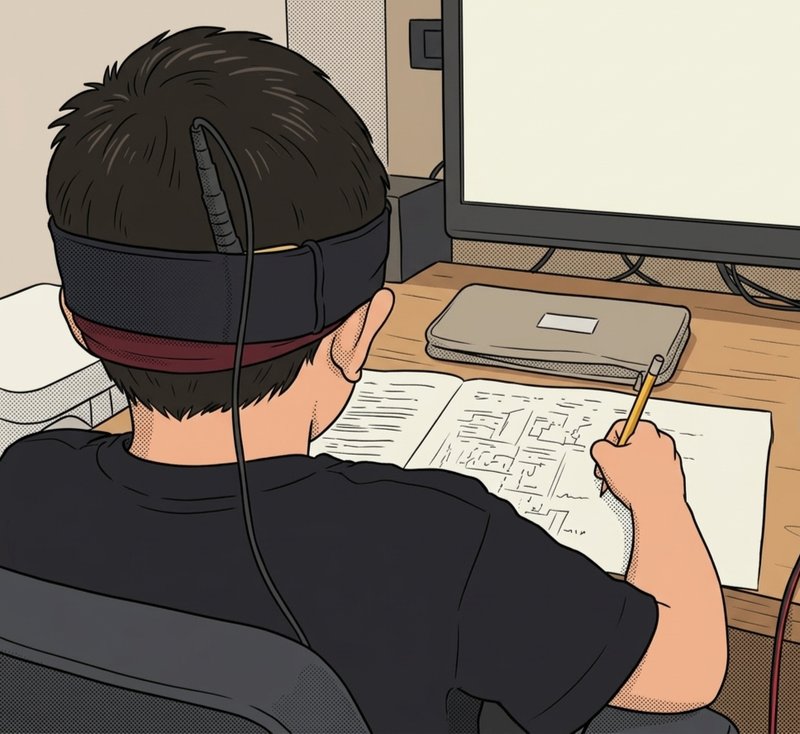
TDCS Neuromodulation: Using Direct Current Stimulation
TDCS uses a direct electrical current that flows in one direction. This current can influence how responsive brain cells (neurons) are to stimulation.
What Do Anode and Cathode Mean?
In conventional tDCS, the anode is the positive electrode, while the cathode is the negative electrode. Both electrodes contribute to the electric field produced in the brain. Anodal tDCS generally increases brain excitability, while cathodal tDCS generally decreases it. In simple terms, excitability refers to how easily brain cells respond to stimulation. Anodal tDCS may make brain cells more responsive, while cathodal tDCS may make them less responsive.
What Does Research Say About tDCS?
Studies have explored whether tDCS can influence brain functioning. For example, Coffman et al. (2014) reviewed studies investigating whether tDCS could affect attention, learning, and memory. The findings provide useful insights into the effects of tDCS, although results can vary depending on the task and stimulation method.
TACS Neuromodulation: Alternating Current to Influence Brain Rhythm
Unlike tDCS, the tACS uses alternating current stimulation that repeatedly changes direction. This technique is made to interact with the brain’s natural rhythms, also known as neural oscillations. These rhythms are associated with many brain functions, including attention, memory, and sleep.
What Electrodes does tACS Use?
Like tDCS, tACS uses electrodes placed on the scalp. However, because the current changes direction repeatedly, the electrodes do not have a fixed positive or negative role throughout a the procedure.
Research About tACS
Researchers are exploring how tACS may support different aspects of brain function. Studies have investigated its potential to influence domains such attention and memory (Booth et al., 2022; Klink et al., 2020).
For example, Grover et al. (2023) found evidence of cognitive benefits across several populations, including older adults. Meanwhile, other studies have explored how specific stimulation frequencies may affect cognitive performance (Klink et al., 2020).
These findings highlight the potential of tACS as an approach to influence brain activity. Research is continuing to explore how different stimulation settings may be used to support specific goals.
What is the difference between tDCS and tACS?
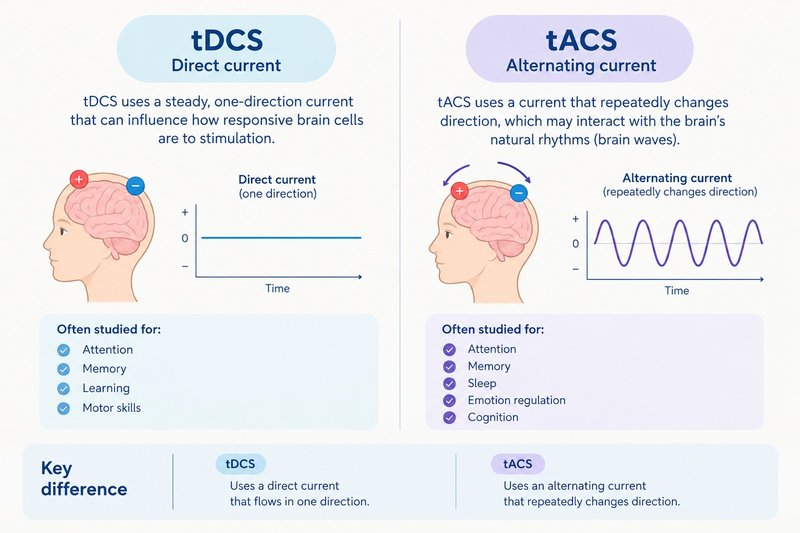
The main difference between tDCS and tACS is the type of electrical current they use. tDCS uses a direct current that flows in one direction and can influence how brain cells respond to stimulation.tACS, on the other hand, uses an alternating current that repeatedly changes direction. Researchers study how it may interact with the brain's natural rhythms. Although both are non-invasive brain stimulation techniques, their effects depend on the stimulation settings and individual factors.
At Brain Optimax, tDCS and tACS are considered as part of an individualised approach to supporting brain function. The choice of method depends on the client's needs and the goals of the programme.
To learn more about neuromodulation and other related topics, visit our website or contact our team at Brain Optimax.
References:
- Booth et al. (2022):The effects of transcranial alternating current stimulation on memory performance in healthy adults: A systematic review
- Coffman, Clark, & Parasuraman (2014): Battery powered thought: enhancement of attention, learning, and memory in healthy adults using transcranial direct current stimulation
- Grover et al. (2023): A meta-analysis suggests that tACS improves cognition in healthy, aging, and psychiatric populations
- Klink et al. (2020): The Modulation of Cognitive Performance with Transcranial Alternating Current Stimulation: A Systematic Review of Frequency-Specific Effects
- Tapsell et al. (2025): What are the optimal transcranial direct current stimulation parameters and design elements to modulate corticospinal excitability? A systematic review and longitudinal meta-analysis
- Thair et al. (2017): Transcranial Direct Current Stimulation (tDCS): A Beginner's Guide for Design and Implementation