
Brain Mapping: EEG vs. qEEG — What Is the Difference?
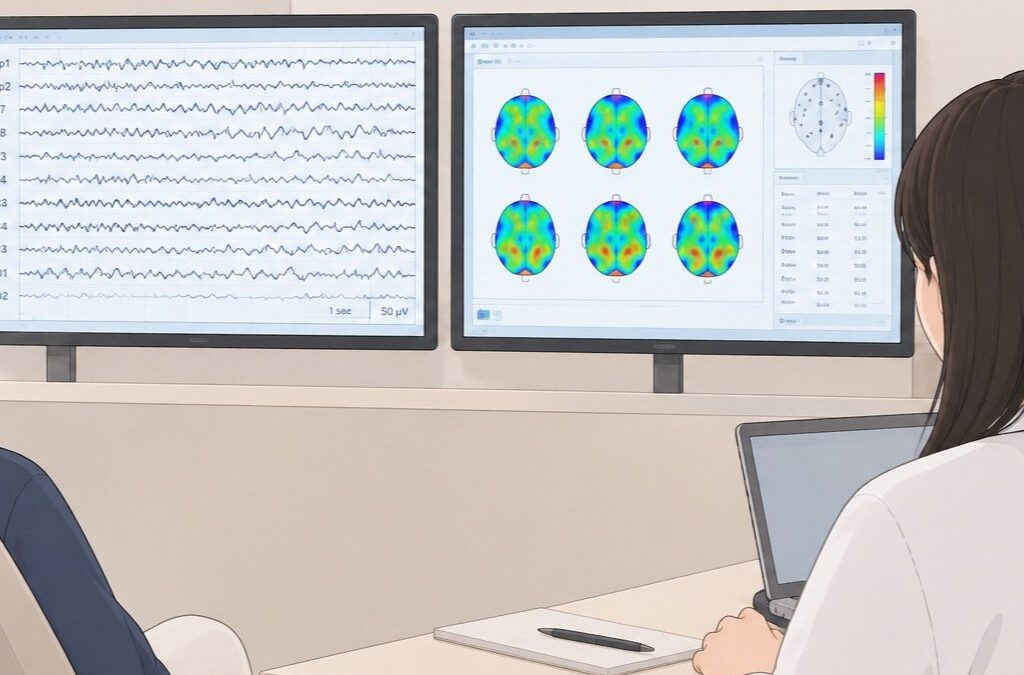
EEG and qEEG brain mapping are closely related, but they serve different purposes. While both measure the electrical activity produced by the brain, the key difference lies in how practitioners process, analyse, and interpret that data.
What is EEG?
EEG (electroencephalography) records the brain’s electrical signals through small sensors placed on the scalp. These signals appear as continuous waves on a screen. In clinical settings, conventional EEG is primarily used by neurologists to identify specific medical conditions, such as epilepsy or seizure activity.
What is qEEG Brain Mapping?
QEEG is short for quantitative electroencephalography. QEEG takes an EEG recording and analyses it using specialised software. This produces numerical data. Depending on the software, practitioners can view these measurements as colour-coded maps. Some systems also compare the results with data from an age-matched reference database.
These visual maps are one way to present qEEG results. They can help practitioners explore patterns of electrical activity across different scalp locations.
The Key Differences between EEG and qEEG
The table below summarises their main differences:
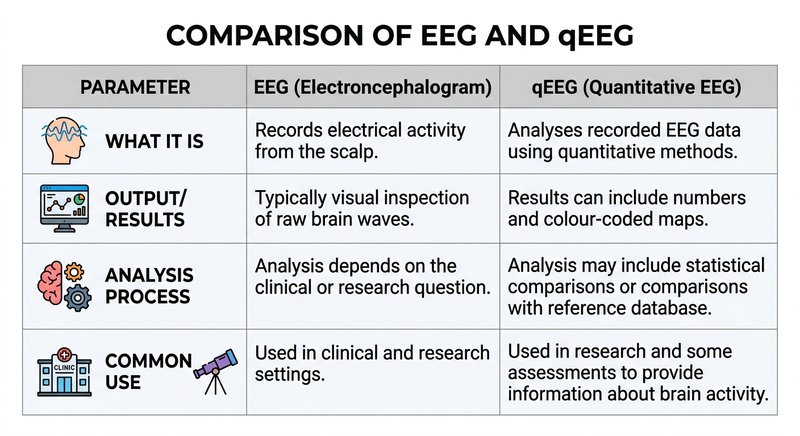
In short, EEG provides the raw signals while qEEG provides a way to analyse them. However, it is important to note that qEEG does not replace EEG. Instead, it adds quantitative analysis to the recorded data.
Does qEEG Brain Mapping Provide More Information?
Yes, qEEG offers deeper insight into wave patterns that might not be visible to the naked eye. However, practitioners must always evaluate results alongside factors such as personal medical history, among others.
Therefore, at Brain Optimax, we view qEEG brain mapping as an important piece of the puzzle, one that helps complete the bigger picture.
Can qEEG Brain Mapping Diagnose ADHD or ASD?
No single scan or qEEG map can establish a diagnosis of ADHD or Autism Spectrum Disorder (ASD).
Although qEEG provides objective data about electrical activity, these findings never tell the whole story. For that reason, practitioners must evaluate brain maps alongside clinical history, observed symptoms, and behavioural assessments.
In Summary
Standard EEG records the brain’s electrical activity, while qEEG (quantitative EEG) helps us visualise and analyse patterns within that activity.
At Brain Optimax, we use qEEG brain mapping to gain a deeper understanding of brain function. It allows us to explore patterns associated with areas such as attention, alertness, emotional regulation, and language processing. These objective insights complement behavioural observations and help guide personalised support plans.
Want to learn more about qEEG brain mapping at Brain Optimax? Visit our website or contact our team.
References:
- Siuly, Li, & Zhang (2016): Electroencephalogram (EEG) and Its Background
- Livint Popa et al. (2020): The Role of Quantitative EEG in the Diagnosis of Neuropsychiatric Disorders