
What Is Neurofeedback Therapy? A Parent’s Guide to Brain Training
When parents hear about neurofeedback therapy, one question often comes to mind: how can a computer help train the brain?
The idea may sound unfamiliar, but the process begins with something straightforward: providing feedback about activity that we cannot normally see or feel directly.
Our brain is constantly producing electrical activity. Although we cannot observe these signals with our eyes, EEG technology allows them to be recorded and analyzed. Neurofeedback uses information from this activity to provide feedback during a structured training process.
So, what actually happens during a session? And how does brain training differ from simply completing an activity on a computer?
What Is Neurofeedback Therapy?
Neurofeedback therapy is a form of biofeedback that uses information about brain activity to provide feedback during training.
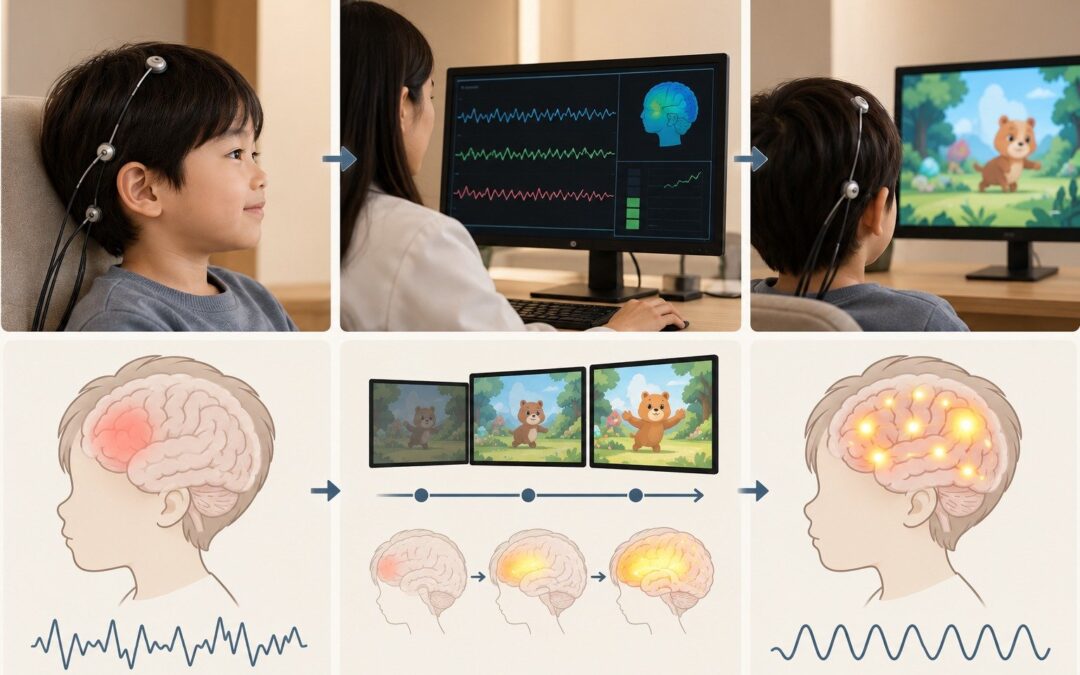
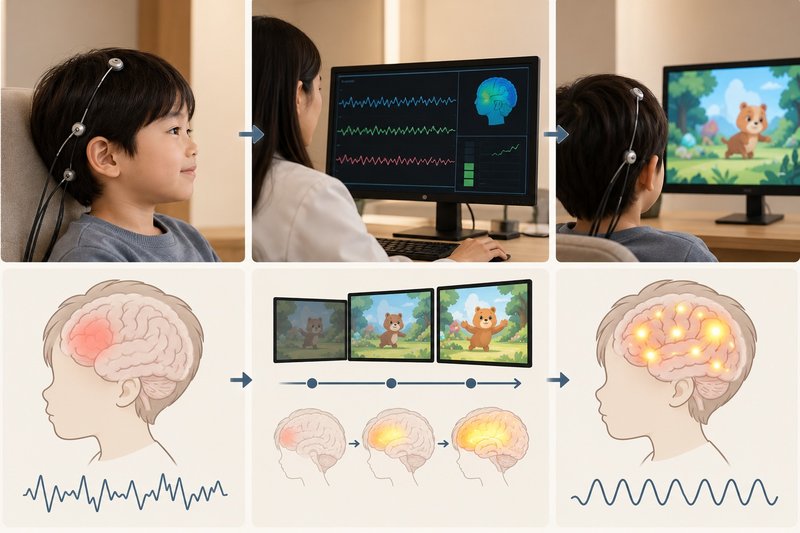
In EEG-based neurofeedback, sensors placed on the scalp record electrical activity produced by the brain. A computer processes selected features of that activity and translates them into feedback, often through a visual display, animation, or computer game.
The feedback gives the individual information about the targeted activity as the session progresses. Through repeated training, the aim is to help the individual learn to regulate selected patterns of brain activity.
Unlike a typical computer game, where progress depends on completing a task or earning points, neurofeedback uses information derived from recorded brain activity to guide the feedback.
How Does Neurofeedback Therapy Work?
To understand the process, imagine learning to adjust the temperature in a room using a thermostat.
Without a thermostat, you might know that a room feels uncomfortable, but you would have limited information about its actual temperature. A thermostat provides feedback about the current conditions, helping you understand what is happening and make adjustments.
Neurofeedback works on a similar principle: providing feedback to help guide learning and adjustment. Instead of receiving information about room temperature, the individual receives feedback based on their own brain activity.
During EEG-based neurofeedback, sensors placed on the scalp record electrical activity produced by the brain. These sensors measure the brain’s electrical signals without sending electricity into it. A computer then processes the recorded signals to identify patterns of brain activity relevant to the individual’s training protocol.
The computer uses this information to control feedback presented on the screen, such as an animation or a computer game. For example, an animation may continue moving when the brain activity meets the goals set by the training protocol and change when it does not.
Through repeated sessions, the individual receives ongoing feedback and opportunities to practice regulating the targeted patterns of brain activity. The aim is to support learning and self-regulation over time, rather than to produce an immediate change in brain function.
Because each individual has different needs, the brain patterns selected for training depend on the findings from EEG or quantitative EEG Brain Mapping and the goals of the training. This helps ensure that neurofeedback is tailored to the individual rather than using the same training protocol for everyone.
What Happens During a Neurofeedback Session?
For a child, a neurofeedback therapy session may involve sitting comfortably in front of a screen while sensors record brain activity.
Depending on the equipment and protocol, the child may watch an animation, interact with a simple game, or follow another visual activity. The feedback responds to selected features of the recorded signals.
The child does not need to understand the technical details of EEG. The clinician manages the equipment and guides the session.
Parents should also understand that the activity on the screen is not simply a game designed to keep a child occupied. Its role is to deliver feedback linked to the training protocol.
The session itself is only one part of the process. Understanding the individual's needs beforehand, selecting an appropriate training approach, and reviewing progress are also important considerations.
Why Does the Brain Assessment Come First at Brain Optimax?
Before neurofeedback training begins, we need information that can help guide the training protocol.
Brain assessment includes EEG recording and quantitative analysis through qEEG. EEG records electrical activity from the scalp, producing raw data that can be examined further. With qEEG, the recorded EEG data are analyzed quantitatively, allowing selected features and patterns to be compared with appropriate reference data from a normative population.
Think of a routine blood test. A laboratory can measure a particular blood component and compare the result with an established reference range to help determine whether it is relatively high, low, or within the expected range. Similarly, EEG or quantitative EEG brain mapping analysis can help identify aspects of recorded brain activity that differ from reference patterns.
At Brain Optimax, EEG or quantitative EEG brain mapping findings are considered alongside the individual's challenges and relevant background information. This helps inform an individualized neurofeedback training protocol.
The goal is not to assume every child needs to train the same parts of the brain. Instead, EEG or quantitative EEG brain mapping helps guide decisions about which patterns may warrant attention and which neurofeedback therapy approach may be appropriate for the individual.
Is Neurofeedback Therapy Evidence-Based?
Neurofeedback is not a new concept. Research into EEG-based feedback and brain self-regulation dates back several decades, with foundational work on sensorimotor rhythm training emerging in the 1960s. Since then, researchers have continued to investigate its potential applications across different conditions and outcomes.
Today, neurofeedback is an established area of scientific research and a structured training approach that has been studied in clinical and healthcare settings.
For ADHD, several research reviews have reported encouraging findings.
A 2024 systematic review published in Pediatrics examined 21 neurofeedback studies. In a subset of 12 studies involving 945 participants, neurofeedback was associated with a statistically significant improvement in ADHD symptoms.
A 2025 meta-analysis published in Scientific Reports examined 17 randomised controlled trials involving 939 children with ADHD. The findings indicated improvements in selected executive-function outcomes, including inhibitory control and working memory.
Together, these findings contribute to a growing body of research exploring how neurofeedback may support aspects of brain regulation and cognitive functioning.
For parents, the important takeaway is that neurofeedback is a research-based training approach with promising findings. Understanding each child's needs and tailoring the training protocol accordingly can help ensure that the process has clear goals and that progress is reviewed over time.
What Should Parents Know Before Starting Neurofeedback?
One of the most important things to understand before starting neurofeedback therapy is that the process requires commitment and consistency. It is not like flipping a light switch; the aim is to practice regulating selected patterns of brain activity through repeated sessions.
It is not designed to produce an instant or guaranteed change after one visit.

The duration and frequency of training depend on the individual, the approach being used, and how progress develops. Consistency matters, and progress should be reviewed rather than assumed.
Parents should also have realistic expectations about what changes in one area may mean for everyday life.
For example, imagine a child who has difficulty maintaining attention during lessons. If attention becomes easier to manage, that does not automatically mean their school grades will improve immediately. Academic performance also depends on understanding the subject, remembering information, completing assignments, practicing skills, and having an appropriate learning environment.
The same principle applies to other goals. Training directed at a particular aspect of brain activity does not automatically teach a child every skill they need to succeed at school or at home.
Children still need opportunities to practice, guidance from adults, and appropriate educational or developmental support.
Before starting a program, parents should understand the intended goals, how progress will be evaluated, and what other support may still be needed.
The aim is to work towards meaningful improvements over time, while recognizing that every individual has a different starting point and learning journey.
Frequently Asked Questions About Neurofeedback Therapy
Is neurofeedback therapy safe for children?
At Brain Optimax, EEG-based neurofeedback is non-invasive. Sensors are placed on the scalp to record electrical activity without anything being inserted into the brain. The training does not involve surgery or the administration of medication.
How many neurofeedback sessions are needed?
The number of sessions varies from one individual to another.
EEG/qEEG brain mapping helps us understand how far an individual's recorded brain activity differs from relevant normative reference data. The extent of these differences can help inform the training plan and the time that may be needed to work toward the training goals.
Individuals also respond differently to training. Generally, more pronounced differences may require more time and training, while individuals with less pronounced differences may progress more quickly. However, this is not always the case, as progress also depends on individual needs, consistency of training, and the goals being monitored.
The most important thing is to approach the process with patience and realistic expectations. Progress should be reviewed over time, and the training plan should be considered in light of the individual's response rather than relying on a fixed number of sessions.
Can neurofeedback replace other therapies or support?
No. Neurofeedback does not replace other appropriate therapies, educational support, or developmental interventions.
Training may target selected patterns of brain activity, but children may still need help developing academic skills, managing daily routines, practicing social skills, or applying what they learn in real-life situations.
The most effective approach often combines brain-based training with the right educational, developmental, and therapeutic support, helping individuals build on their progress and apply it in everyday life.
Further Reading
- Treatments for ADHD in Children and Adolescents: A Systematic Review. Pediatrics, 2024. https://doi.org/10.1542/peds.2024-065787
- Neurofeedback Training for Executive Function in ADHD Children: A Systematic Review and Meta-Analysis. Scientific Reports, 2025. https://doi.org/10.1038/s41598-025-94242-4
- Review of the Therapeutic Neurofeedback Method Using Electroencephalography: EEG Neurofeedback. 2019. https://pmc.ncbi.nlm.nih.gov/articles/PMC6716090/