
Brain Mapping: How Does qEEG Work?

Ever imagined what is happening inside your brain? What if, like a weather map, you can see colour-coded pictures of your brain? Today, qEEG brain mapping makes this possible.
What is qEEG Brain Mapping?
This method of brain mapping begins with a electroencephalogram (EEG).
First, EEG records electrical signals from the scalp. It uses small sensors called electrodes. These signals reflect the combined electrical activity your brain cells (Britton et al., 2016). Next, quantitative EEG (qEEG) analyses these recorded signals. Then, the software turns these signals into numbers and colour-coded maps. This process helps visualise brain activity.
How Does Brain Mapping Work?
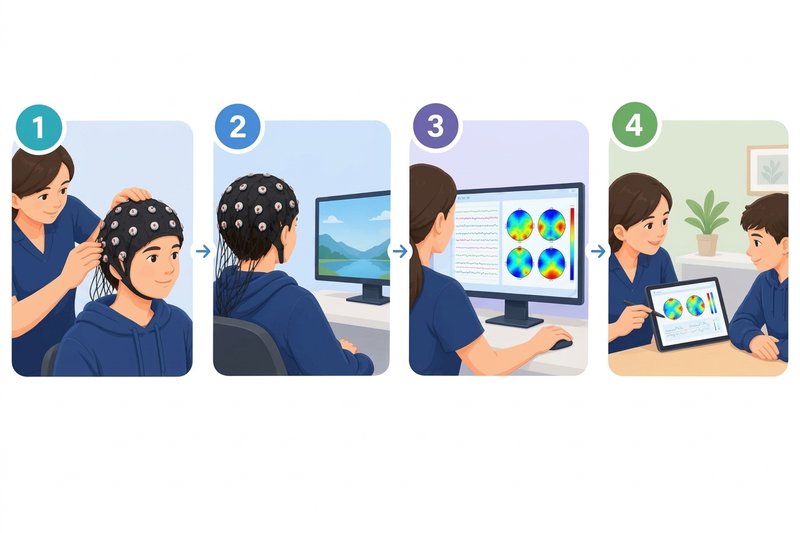
QEEG Brain mapping uses a non-invasive recording process. A practitioner fits a cap with sensors on your scalp.
The practitioner records your brain activity while your eyes are open or closed. Depending on the evaluation, it may also involve specific tasks. Once the recording is complete, the practitioner processes and analyses the data using a specific software.
What Do Brain Maps Show?
The software creates visual maps. The maps use colours to represent electrical activity across different scalp locations. There are four primary waves that are commonly analysed (Attar, 2022):
- Delta: Observed during deep-sleep
- Theta: Represents the relationship between wakefulness and sleep; often linked to
- relaxation and meditation.
- Alpha: Observed during the brain’s relaxed yet alert state.
- Beta: Active during focused and “problem-solving” states.
Each of these waves play a different role in brain functioning. Through qEEG brain mapping, practitioners can see if certain regions have an overactivation or underactivation of these waves.
The software may also compare the results with a reference database. This helps show how they differ from typical values for people similar to your age.
What can qEEG Tell You?
QEEG Brain Mapping can help provide additional information about patterns in certain regions of the brain related to attention, alertness, sleep, and other aspects of brain function. In addition to other conventional tests, they offer another perspective beyond what can be observed through behaviour alone.
More broadly, the qEEG is used to study how electrical brain activity connects with psychological processes. This approach is explored in fields such as psychological electrophysiology and psycho-neurophysiology.
Furthermore, qEEG findings can also help inform precision neurofeedback, which is a tailored approach to training your brain.
When Should You Consider qEEG Brain Mapping?
Brain mapping offers a way to see a new perspective into ongoing or persistent symptoms. If you or someone you know have questions regarding attention, learning, or cognitive functioning, a qEEG assessment can be helpful.
Would you like to learn more about qEEG assessments? Visit the Brain Optimax website or contact our team.
References
- Halodoc: EEG dan Brain Mapping
- Neurothérapie Montréal: What Is qEEG Brain Mapping and What Can It Tell Us?
- NeuroFit Brain Centre: What Is qEEG and What Can It Tell You About Your Brain?
- Britton et al. (2016): Electroencephalography (EEG): An Introductory Text and Atlas of Normal and Abnormal Findings in Adults, Children, and Infants
- Attar (2022): Review of electroencephalography signals approaches for mental stress assessment